

Why The Category You Choose Is The Most Important Decision
SEBI splits every AIF into one of three categories at the point of registration, and that single choice determines your tax treatment, leverage limits, investor base and regulatory obligations for the life of the fund. Getting this decision wrong is expensive to reverse.
By The Numbers (March 2026)
- Category II: ₹12.74 lakh crore in commitments — over 90% of quarterly industry growth
- Category III: ₹3.15 lakh crore in commitments, up from ₹2.30 lakh crore a year earlier
- Category I & II funds: typically closed-ended, 5-10 year tenure
- 1,849 total registered AIFs across all three categories as of March 2026
Category I: Economy-Building Funds
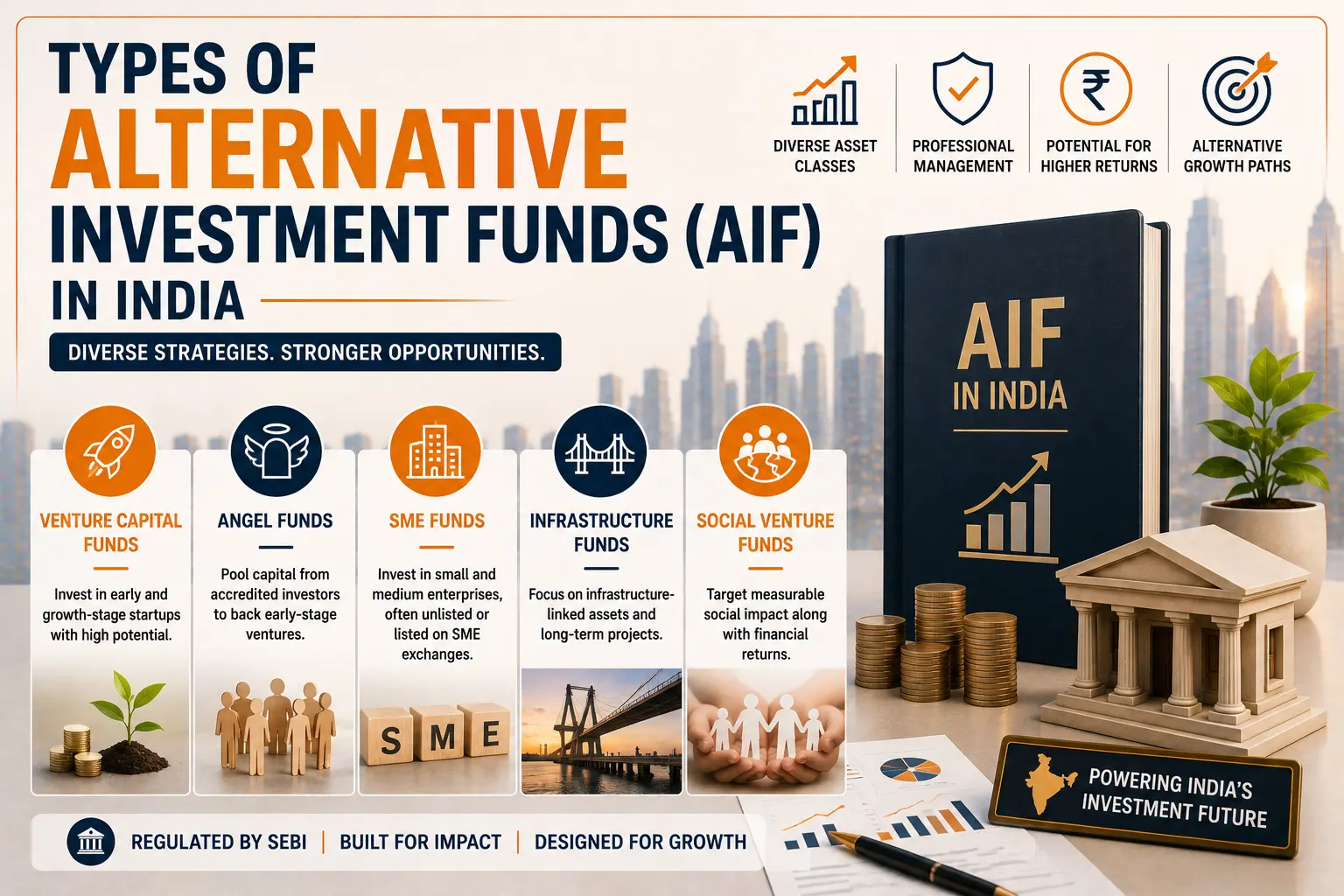
- Covers: Venture capital, angel funds, SME funds, infrastructure funds, and social venture funds.
- Regulatory incentive: Considered socially and economically desirable by SEBI, so these funds get certain relaxations, including limited leverage restrictions.
- Best suited for: Early-stage capital, MSME growth financing, and impact-linked investing.
Category II: The Growth Engine
- Covers: Private equity, debt funds, and real estate funds — the largest and fastest-growing category by far.
- No specific incentives, but no major restrictions either: Category II cannot borrow except for meeting day-to-day operational requirements.
- Driving force: Real estate alone posted ₹1.29 lakh crore in investments as of March 2026, up sharply from ₹75,350 crore three months earlier.
Category III: Complex, Trading-Oriented Strategies
- Covers: Hedge funds and funds using complex trading strategies, leverage, and derivatives.
- Regulatory posture: The most closely monitored category, given leverage exposure and trading complexity.
- Momentum: Commitments rose nearly ₹84,800 crore year-on-year to ₹3.15 lakh crore, though quarterly growth softened slightly.
Recent Update
The GARUDA mechanism, approved by SEBI's board on June 19, 2026, treats these categories differently at the filing stage. Regular schemes across categories now launch within 10 working days; Large Value Funds and Accredited-Investor-only schemes continue to follow a distinct, faster track designed around their more sophisticated investor base.
Things To Consider
- Match the category to your capital, not the other way around: Category I suits smaller, mission-linked funds; Category II suits scaled PE/credit/real estate plays.
- Leverage rules differ sharply: Category III funds face active leverage monitoring; Category I and II largely do not borrow for investment purposes.
- Investor appetite has shifted toward Category II: If you're raising from HNIs today, expect the bulk of interest to gravitate there.
Key Takeaways
- Category II now accounts for the overwhelming majority of AIF industry growth.
- Category I remains the preferred route for VC, angel and SME-linked capital.
- Category III is smaller but growing fast, largely on the back of sophisticated trading strategies.
How Panchal S K and Associates Can Help
Choosing between Category I, II and III has long-term tax and structuring consequences. We help fund promoters map their investment strategy to the right category before a single filing is made.
Reach out to Panchal S K and Associates for AIF structuring, SEBI registration, compliance and fund governance support.